
How is Matt doing, you might ask. Matt’s doing okay, I’d answer—depending upon the moment. Sometimes great, sometimes terrible, and most often somewhere in the middle. Almost everything in the universe exists on a spectrum, and my grief is the same. It’s also almost impossible to quantify “good” or “bad” when there are a bunch of ways in which a day might be going well or horribly at any given time. Maybe I’m feeling accomplished at having made breakfast (like the last several days) and yet feeling really isolated (also like the last day or so). How would you answer that question, given that level of complexity?
I think most “normal” folks have given up on answering this question with any degree of honesty or vulnerability whatsoever. I think people may feel that it’s part of the social contract we all dwell within—I commit to telling you I’m doing great, you commit to asking anyway, and we’ll both just agree to pretend. That feels so disingenuous to me on a good day, and downright dishonest on a bad one. I think the standard answer “I can’t complain” is even worse than saying “great!” because it’s just another way of saying “things are bad but nobody would listen or there’s no point in telling you how I feel anyway because I know nobody cares or can help it get any better”.
I’m not “normal” these days, though, and I’ve given up on the idea of ever falling within the average emotional range of most people anyway. “Normal” is a scam for the most part to begin with. But my baseline day does not look like your baseline day, probably. Which is the whole point of taking a baseline measurement—acknowledging that we all have our own “normal” levels of all kinds of things.
So how am I today? More okay than not (at least 51% okay). That’s going to have to be good enough for you at this point.
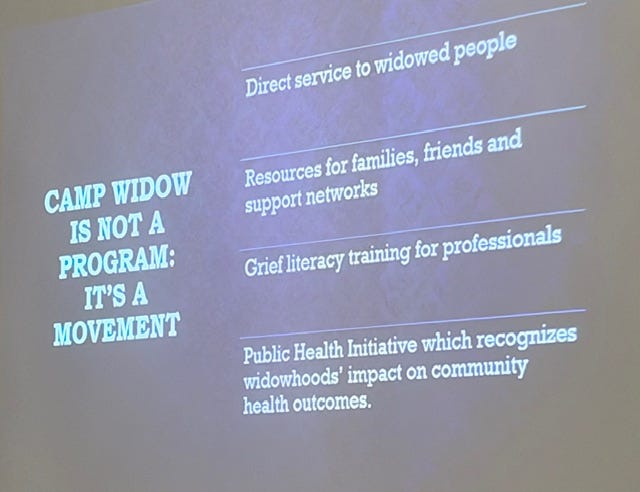
On Friday, I had a unique experience. I spent the day at Camp Widow in Buffalo. Camp Widow events are sometimes three-day events and sometimes a single day. They take place in several different cities each year, and are put on by an organization called Soaring Spirits International. Soaring Spirits was founded by two women who were both widowed in 2005, with the goal of trying to connect people in my position and provide resources and hope and support to folks who belong to this club. It bears saying (as I heard on Friday) that widowhood is something we don’t talk about or even think about a whole lot in our society, even though the majority of us will experience it at some point in our lives (if we’re lucky enough to have a long-term partner). The odds are pretty good that you’ll be the one left behind, if you’re not the one leaving your partner. And yet we don’t have these kinds of conversations before such a loss, and then those of us who are put in this position do so without a great deal of well-informed support.
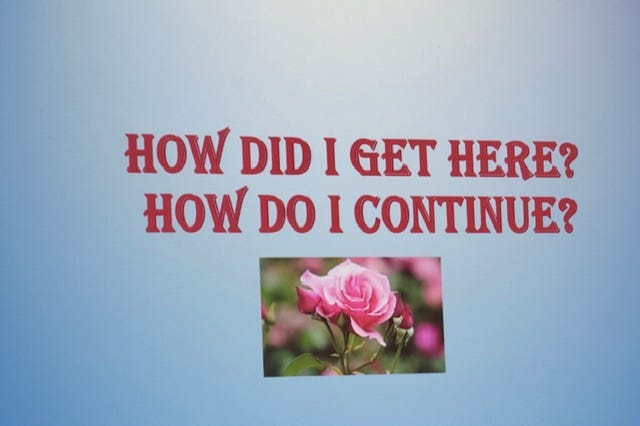
To be clear, I’ve had huge amounts of support! But none of those in my support network are actually widowed themselves, and that makes a difference.
That thought about lived experience being valuable and indispensable is something I’ve wrestled with for at least ten or fifteen years. I thought I was pretty set in my professional perspectives on lived experience, and have received my comeuppance on that (as on so many things). I have also been very sure that suicide loss is the worst possible traumatic loss experience, but I’ve changed my mind about that as well.
As the founder of Soaring Spirits discussed with us on Friday, being widowed from your long-term partner is the most difficult loss experience we can probably have. There are no other forms of loss that cut across every single part of our lives: social, physical, financial. There are no other forms of loss that sever our future goals and plans so completely, and no other forms of loss that also involve so little meaningful support. Losing your long-term partner carries with it massive increased mortality risks (as I noted the other day). It cuts your income in half, or maybe more (depending upon who was the primary income earner in the family). It causes long-term or permanent cognitive and memory deficits. It changes every single thing for those of us who are unfortunate enough to experience it. And yet we don’t have these kinds of conversations, in part because of how scary it is to consider our own mortality and the strong possibility of going through it ourselves (if we haven’t already experienced it).
In terms of lived experience, I think it’s important that we have folks in our lives who have some shared elements with us. I know that there are a million elements of identity which all but ensure, however, that there’s nobody out there in the world who can completely share your perspective or history. It’s commonly said that “You can’t understand something until you live through it”. I struggle with that belief, largely because I have such little common ground with so many of my clients (and always have). I have served as a clinical supervisor over addiction treatment for a decade of my career, and yet have never struggled with a substance use disorder myself. I’ll bet 75% of my clients have been female, and I’m a cisgender male. I grew up in multiple states and then spent most of my formative years in the Philippines, and almost never encounter anyone in my rural Ohio community who has visited that incredible place. At the same time, my high school years were spent in Manila, which is a massive city. So I had very little direct experience with rurality until I moved to Ashtabula County in the mid-90s. I’ve been surrounded by religious folks for my whole life, but most of them were some flavor of Christian or Muslim. I’ve been a Quaker for four or five years, and have never met someone who identified as Quaker in my local area (at least as far as I know). These are just a very few examples of elements of identity that exist for us all, and I haven’t even spoken about the ways that power and privilege interact with all those elements of identity. Intersectionality is a real thing, look it up!
All of that said, if we could never understand or identify with or learn about things we haven’t directly experienced, then I might as well stop my clinical work entirely. I’m never going to find someone I can understand if I’m limited to 49-year old cis white guys who live in rural Ohio and grew up overseas (and who have recently been widowed). In the case of addiction, I’ve long-argued that lived experience with addiction paves the way to engagement and a positive therapeutic alliance in the professional relationship, which is the most important facet of treatment. So those who have experienced addiction themselves have a head start on building that relationship, but they’re not the only ones who can grasp significant aspects of that person’s lived experience, given the opportunity to be given a tour of their life by that person. Because they are always going to be the biggest expert in their own story, but they can teach us about that story if they’re willing to do so.
But now, having been widowed by Kellie’s death, I feel like I have had to dramatically revise my opinions about my knowledge specific to sudden and traumatic loss. That’s been kind of a huge blow to my professional ego, honestly. If you’d asked me six and a half months ago whether I was an expert in sudden loss, I would have very confidently told you “Absolutely!” Now, though? I’m a lot less sure. And that’s kind of a difficult pill to swallow. At that point back in April, I felt like I had to re-learn everything from scratch. Probably part of that is because of the notorious “widow’s brain” wherein the cognitive load of having so many disruptions all at once often leads one to struggle to remember and retain info that used to be second nature. Some folks say that your normal level of cognitive functioning never comes back, but I’m still hopeful it’s not a permanent state of being.
I was having a conversation with a friend about this the other day, and about how I’ve always felt like I couldn’t be an expert in someone else’s lived experience but that I could come inside their experience and be shown around by them, learning as I went, and thus gain a lot of insight into what it felt like to be them going through whatever experience. And how now it feels like that knowledge about traumatic loss has left me, beyond what I’ve learned about it as I’ve lived these last six months. In the midst of that conversation, I had a realization that something which could explain the dynamic I’m struggling with is that I don’t have someone else to show me around this experience—since it’s happening to me, I don’t have the luxury of being able to observe, catalog, reason, help them develop a healthier perspective—because it’s me alone inside my head. Nobody’s here to help me understand this experience, since it’s MY experience. That’s a pretty terrifying thought on a lot of levels, and I’m still trying to figure out what it ultimately means to me.
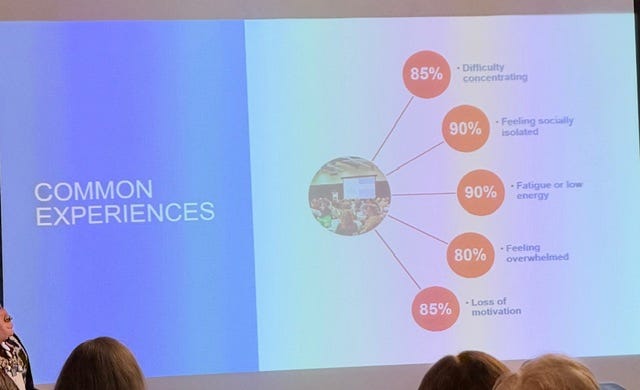
Camp Widow was such an incredible experience primarily because the vast majority of what was said during that day by other widowed folks resonated with me on some level. I heard them talk about their experiences and they felt an awful lot like mine, in many different ways. I’d never had that before, since as I’ve said this isn’t a collection of things that we tend to talk about a ton with other people. The down-side of that, of course, was that as others shared their very emotionally-charged experiences (which felt like my own), it tended to make me very emotional as well, even though we weren’t talking about Kellie or me at that point at all. All of the lessons I learned from Camp Widow are going to help me moving forward, and I suspect they’re going to help a great deal.
We were encouraged to take care of ourselves after leaving, since it’s pretty common for people to have a post-camp slump. Having a lot of these things normalized for nine or ten hours and being surrounded by folks who truly get it (and then coming back to the real world) can feel like a bit of culture shock. They told us to take care of our hearts and our minds and our bodies as we process what things we want to take away from Camp Widow. I appreciated the reminder very much.
In fact, I took it so much to heart that I came home and slept nine hours that night (which is about three hours longer than my usual). Yesterday was a day of rest as well, in addition to a fair amount of melancholy because I felt Kellie’s absence really keenly. Today has been pretty restful too, though I got a lot of work done due to it being Indigenous People’s Day and not having a ton scheduled.
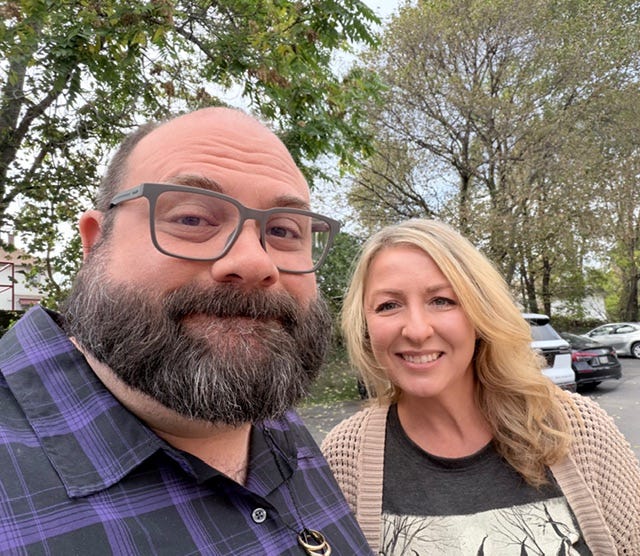
Lindsay and I got to have a lovely lunch and then go shopping for art supplies, because Margot has been encouraging me through my first halting steps toward trying to learn how to paint with watercolors.
I’m still thinking about what Friday will mean to me long-term, but I suspect it’s going to turn out to have been a really useful step in my attempts to create a sustainable and healthy and joy-filled life. That’s the goal, at any rate.
XOXO,
Matt